

A Journey
- Feb 10
- 17 min read
Updated: Feb 18

In early September 2025, Charmaine and I set off on a 5-week trip to Europe with brief stops in Japan on the way up and on the way back. We had made a memorable trip to Japan and Taiwan in 2024, but this was our first trip to Europe since the dark days of COVID. What follows is just a peep into our 2025 trip, with some – but certainly not all – of the highlights.
On the Way Up
Our initial target was Paris, a city Charmaine had never visited and a city I hadn’t been to for 40 years! It was a long leg from Sydney via Tokyo and Helsinki . So, we decided to break the journey in Tokyo. This proved to be fortuitous, because we were transiting through Tokyo Haneda airport. Strictly speaking, this is part of the greater Tokyo area, but in reality it could be on another planet.
Our hotel, Keikyu EX Inn, was adjacent to Tenkubashi station, just one stop from the airport and standing at the entry to Haneda Innovation City, a new, somewhat sci-fi, technology and business hub with lots of amenity and striking views to the airport and the Tama River.

Since our flight to Helsinki and Paris didn’t leave until 9.50 pm the following night, it gave us the opportunity to explore the immediate environs. Taking on some advice from the hotel, we set out the next morning for the town of Anamori Inari, just two metro stops away.
This small low-rise town (part of the Ota City conurbation) is quiet and full of character. But it is notable for the Anamori Inari Shrine, just a short walk from the station. It is a small but fascinating temple, dedicated to the inari (white fox gods). It was originally on the site of what is now Haneda Airport and moved to its current site in 1945. Approached through imposing, bright vermilion torii (gates), the shrine is small but endlessly fascinating with its vermilion torii ‘tunnel’, numerous fox statues, oyashiro (miniature places of worship) and a slightly bizarre observation tower (a re-imagining of the sacred mountain, Inariyama) at the rear, providing intriguing views over the town.

Paris
If you don’t know the rue Montorgueil, you should – if only because of Claude Monet’s well-known painting, Celebrations, June 30, 1878, which captures the energy and character of the street. Not that the narrow street – which runs in a more or less straight line from Châtelet les Halles up to the Sentier metro station – is always quite as colourfully packed as in Monet’s painting. But this cobblestoned market street (along with its side streets) seems to host every conceivable type of retail business, but especially food, wine, cafes and restaurants and is ceaselessly busy until late at night.

At the Châtelet end it is also adjacent to two significant Paris cultural edifices – the wondrous Eglise Saint-Eustache dating from 1532 and the fascinating Bourse de Commerce. The latter dates from 1767 (when it was a commodities exchange), although subsequently subject to a number of significant restorations. But it retains its signature circular form topped by its 19th Century iron and copper copula, not to mention the Medici Column from1575 which still fronts the building. The building is now home to the Pinault Collection and temporary exhibitions, now viewed in Tadao Ando’s emphatic 30 feet high concrete cylindrical insertion from 2021.
We rented a 1-bedroom apartment in the rue Mandar, a side street off Montorgueil and just a few minutes walk to all the irresistible boulangeries, fromageries, patisseries et al. The location was also ideal for visiting the museums with the Pompidou, Louvre, d’Orsay and l’Orangerie all easy and interesting walks.

We caught up with our friends, Paul Thompson and Veronique Bernard, who live near the Place de la République. Apart from dinner at the nearby Clown Bar, Paul offered to show us over Montmartre. This was our introduction to the Musée de Montmartre which, apart from temporary exhibitions, is home to Suzanne Valadon’s studio. The gardens are rightly famous and the ‘Renoir garden’ (after Renoir’s 1876 painting, The Swing, set in the garden) was perfect for lunch on an Indian summer day.


Another first was a visit to Monet’s restored house and garden at Giverny, about an hour by train from Paris. We went on a weekday and, while it was busy, it was not unpleasantly so – which can’t be said these days for the Louvre et al. Also, the Indian summer meant that the garden and ponds still had the charm we expect from looking at the paintings, including plentiful still-blooming water lilies. Monet’s house was fascinating for all the usual voyeuristic reasons, but especially for his extensive collection of Japanese Ukiyo-e woodblock prints (there are 243 of them) which hang on the walls of every room as they did when Monet was still alive, slightly faded, but remarkably resilient.


But also in Giverny is the Musée des Impressionismes which is a must see, just a short walk from Monet’s house. Firstly, it is a fine example of museum architecture (architect Philippe Robert) with a fluent connection of spaces, both internal and external, a building designed to complement the landscape it sits in. The collection is fascinating, one highlight being Gustave Caillebotte’s Bed of Daisies (c.1893), a large immersive decorative painting, a presage of abstraction and surely a highlight of this still under-rated artist’s astonishing, if short-lived, career.


Nice

From the start of planning, we had factored in a pilgrimage to the Chapel of the Rosary in Vence designed and realised by Henri Matisse between 1948 and 1951. I had been to Nice once before, in the mid-1970s. Although I knew about the chapel, inexplicably I didn’t go there. Since then there have been some discreet changes, including exhibition spaces over two levels which give visitors the opportunity to see Matisse’s preparatory drawings and models, along with texts and historical photographs, as well as Matisse’s astonishing church vestments which are still used for services in the chapel. Seeing these preparatory studies is vital because the process – essentially experimental, like Matisse’s entire career – was crucial to the final outcome.

One could write a book about the chapel. And, indeed, there have been several, notably Marie-Thérèse Pulvenis de Séligny’s The Chapel at Vence (Jaca, 2013). De Séligny is a curator at the Musée Matisse in Nice – unfortunately closed to instal a new exhibition while we were there.
But an especially apposite and comprehensive one is Charles Miller’s The Spiritual Adventure of Henri Matisse – Vence’s Chapel of the Rosary (Unicorn, 2024).

Matisse said: “Despite all of its imperfections, I see it (the chapel) as my masterpiece…It is the result of a life devoted to seeking the truth.” For Matisse, art was a process of stripping away everything until one reaches the essence.

This in itself is a kind of spiritual journey in which there are no presumptions and in which all precedents are called into question. But, for Matisse, this spiritual journey became explicit. The chapel project became a vehicle for Matisse – not so much a lapsed Catholic as a passive one – to process his experience with near fatal intestinal cancer and the appalling suffering of his daughter, Marguerite, at the hands of Nazi interrogators late in the War.

The process of designing the chapel was a complex one, involving as it did constant consultation with the commissioning Dominican brothers and sisters who were, in many cases, highly sophisticated in regard to art and architecture, especially in their religious application – soeur Jacques-Marie, for example, who initiated the chapel project had, in fact, worked for Matisse as an assistant and model before entering the church.

This small and unostentatious chapel sited on a hillside just outside the township of Vence is a miracle of architectural simplicity and spiritual clarity. Its stained glass windows, its ceramic illustrations and ritual objects represent the dénouement of Matisse’s lifelong decorative project – what Jack Flam refers to as “the metaphysics of decoration”. Effectively, the Chapel is a three-dimensional surface because Matisse took a small, enclosed space and, through the play of colours and lines, gave it “the dimensions of infinity” (Miller).

Fortunately, it is not on the mass tourist hit list, so the likelihood is that when you visit you will be part of just a small gathering who, like you have made the effort to get to this relatively out-of-the-way destination.
We looked at the various bus and train options, but elected in the end to get an uber from our hotel in Nice – not expensive and maybe 45 minutes to get there.

In fact, we also used uber to get from the Chapel to Saint Paul de Vence, a stunning mediaeval town with its dominating ramparts affording spectacular views back across the hills towards the coast. The town is highly walkable (including the host of small shops along the cobblestoned lanes on the way up to the top of the ramparts) and an ideal place for lunch or coffee.
It is also an ideal starting point to visit the splendid Fondation Maeght, walkable from the town, up the hill back towards Vence – so, ideal for after-lunch exercise.

The Fondation has its origins in the Galerie Maeght founded in 1948 in Paris, a gallery specialising in between-the wars and immediate post-War French and Spanish modernist painting and sculpture. The Fondation complex is set in the Colline des Gardettes overlooking Saint-Paul de Vence – an expansive garden setting featuring numerous sculptures integrated into the landscaping.
The main gallery complex, designed by the eminent Catalan architect, Josep Luis Sert, is a classic example of modernist architecture with a fluent counterpoint of landscape, sculpture and interior gallery spaces. The original building and associated courtyards and water features has since been expanded by additions. The Fondation’s programme includes its permanent collection and a variety of temporary exhibitions. When we visited it offered a splendid survey of the career of British sculptor and painter, Barbara Hepworth.

And, yes, we did uber back to Nice, picked up from the Fondation’s public carpark just off the main road to Saint-Paul de Vence.
Geneva
There was a time when I knew Geneva quite well. But that was a long time ago and our visit this time was not so much to explore Geneva itself – although we did enjoy strolling through the old town and along the shore of Lac Léman – as to use it as a base to visit Annecy, just over the border in France.
I had also visited Annecy before – I had a terrible cold at the time – but even then the lake was inseparable from my memory of Cézanne’s astonishing painting of it in the Courtauld Museum in London. Charmaine had also seen the Cézanne painting more than once and we were both keen to match up our memory of the painting with seeing the lake ‘live’.

After coffee and a stroll through the old mediaeval town and its canals we reached the lake and…well, whether you’ve seen it before or not, the beauty of Lac Annecy, combining alpine majesty with a kind of exquisite elegance, grace and calm, is overwhelming. Charmaine insisted on taking a cruise around the lake which proved to be a smart move because it was an opportunity to be a part of the lake rather than simply standing back and admiring it.

Zürich
Two nights in Geneva and two nights in Zürich is enough to send anyone travelling on Australian dollars bankrupt. But in Zürich we stayed in the middle of town, more or less opposite the Hauptbahnhof, so we were in walkable distance to our targets. On Day 1 we were able to visit the magisterial St Peters Church and the lake, leaving Day 2 for the Kunsthaus.

But fortuitously, on the way to the Kunsthaus, we discovered the breathtaking Rechtberggarten with its splendid courtyard and terraced gardens. Dating from 1790, the gardens are among the finest Baroque gardens in Europe. Scaling the terraces, from the top, one can look back down and view the terraces in reverse with the residence in the background. Not on the mass tourist hit list and with free, no fuss – just stroll through the gate – entry, this is a treasure.
I had visited the Kunsthaus many years ago and remembered it for its splendid collection of Giacometti. Again, this is not on the mass tourist hit list, so one can enjoy its fabulous collection – there’s a lot more than Giacometti to savour – and take in the individual works in one of the best designed museums in the world. The collection dates from the 13th Century, but highlights modern work from Impressionism on.

And that was before the David Chipperfield-designed extension opened in 2021 on the opposite side of Heimplazt. This is a splendidly minimalist sandstone façaded building, generally accessed by a tunnel from the original building.

The superb Emil Bührle Collection is a microcosm of the general collection. Bührle was a German born Swiss industrialist who was a prominent arms manufacturer during World War Two. He became a major international collector of modernist painting, much of which he acquired during the War. However, concerns over the provenance of some of the paintings emerged with suspicion that some had been looted by the Nazis. After a rigorous investigation, five paintings (by Courbet, Monet, Toulouse-Lautrec, Van Gogh and Gauguin – which gives you some idea of the quality of the collection) were returned to the Bührle Foundation (from which the collection is on permanent loan) in order to resolve issues of provenance.
But we were fortunate to catch the exhibition, A Future for the Past (which closed on September 28th, 2025), a superbly curated presentation of the Bührle Collection which contextualised the work in a parallel presentation (documents, texts, photographs) rigorously examining Bührle’s life and business, and all the issues to do with provenance and the story of looted art during the War – without fear or favour.

A visit to Zürich’s Kunsthaus is not just a delight – to able to see great art in two great buildings in a perfectly calm and reflective atmosphere – but a privilege.
Prague
Prague offered an equally fine example of curation.
In Australia we are becoming accustomed to a species of curation which relies on gimmicks and owing more to interior decoration and stunts rather than scholarship and the judicious and coherent presentation of the work.

My son, Oliver, took us to the Kunsthalle which, despite the name, is actually a private museum. The museum is a contemporary insertion into a former transformer station (dating from 1930) which is a declared cultural monument. It is beautifully designed and intimate, housing its own collection and hosting temporary exhibitions of modern and contemporary Czech and international art. It sits at the bottom of the hill leading up to Prague Castle in the Malá Strana area. Here we were able to enjoy a superb exhibition of the work of Hans Hartung (1904-1989) and Anna-Eva Bergman (1909-87) entitled And we’ll never be parted.

In part, the exhibition traced the extraordinary relationship between the two. Hartung was German born, but spent much of his life in France, even serving in the French foreign legion from 1939 for some years, until losing his leg in combat, and earning French citizenship in 1946. Bergman was born in Sweden but grew up with her Norwegian mother in Norway. The two were married to one another – twice! – from 1929 to 1938, and again from 1957 until Bergman’s death in 1987, with each having married and divorced other people in the intervening years.

This says a lot about the deep emotional bond between them. But the relationship was also a dynamic artistic collaboration with the two sharing ideas and providing critiques of one another’s work, but ultimately pursuing their own individual artistic programmes.
They shared a passion for experiment, seeing art as a kind of laboratory. While both had a rich artistic provenance in modernist European art and Expressionism, both were committed to challenging precedent and pursued an exploratory approach to their art which involved not just its expression, but also its materials, tools and processes. Both had a solid artistic provenance, but were committed to challenging assumptions and conventions, and both shared a spiritual Weltanschauung (world view) sourced from nature.
For both, the golden ratio was a foundational structural principle and for Bergman (with her post-War abstract metal leaf works) ecclesiastical decorative practices were crucial.

Both were formidably serious artists (although Bergman showed an early talent for political and social caricature) with a highly developed sense of vocation. Hartung was a major figure in post-War abstraction. There were – and are – artists who give abstraction a bad name. Hartung is not one of them.
Both found Germany not just stifling, but dangerous (due to the Nazis) and spent time in Paris. Ultimately, though, they preferred the light and landscape of the Mediterranean, living in Menorca before the War and then Antibes from 1957 to 1987 in a home with studios designed by Hartung.
London
In London we rented the downstairs apartment of a terrace house in Shepherd’s Bush, just off the Uxbridge Road. We’d never even been to Shepherd’s Bush before, so this was something else – an extraordinary mix of contrasts from the Middle Eastern and South Asian (throw in some Polish businesses as well) along the Uxbridge Road strip including the well-known market, to…past the old Shepherd’s Bush underground station and around the corner past the new station to be confronted by Westfield, not just a cultural transformation, but basically a city in itself. And light years away from the Uxbridge Road.

Oliver joined us for a couple of days and we made a trip to Kenwood, one of our favourite destinations. Unfortunately, it was a wet day and a stroll through Hampstead Heath was out of the question. So we spent our time in Kenwood House.

Like exocet missiles, we made our way to view Vermeer’s The Guitar Player (1672), a late and especially fine Vermeer which is the jewel (along with Rembrandt and Hals) in the Kenwood House collection. As luck would have it, there was a micro exhibition of this painting and the ‘copy’ from the Philadelphia Museum of Art, the two brought together for the first time in 300 years. Viewers were invited to ‘spot the differences’ and form their own view on whether Vermeer himself did this version.

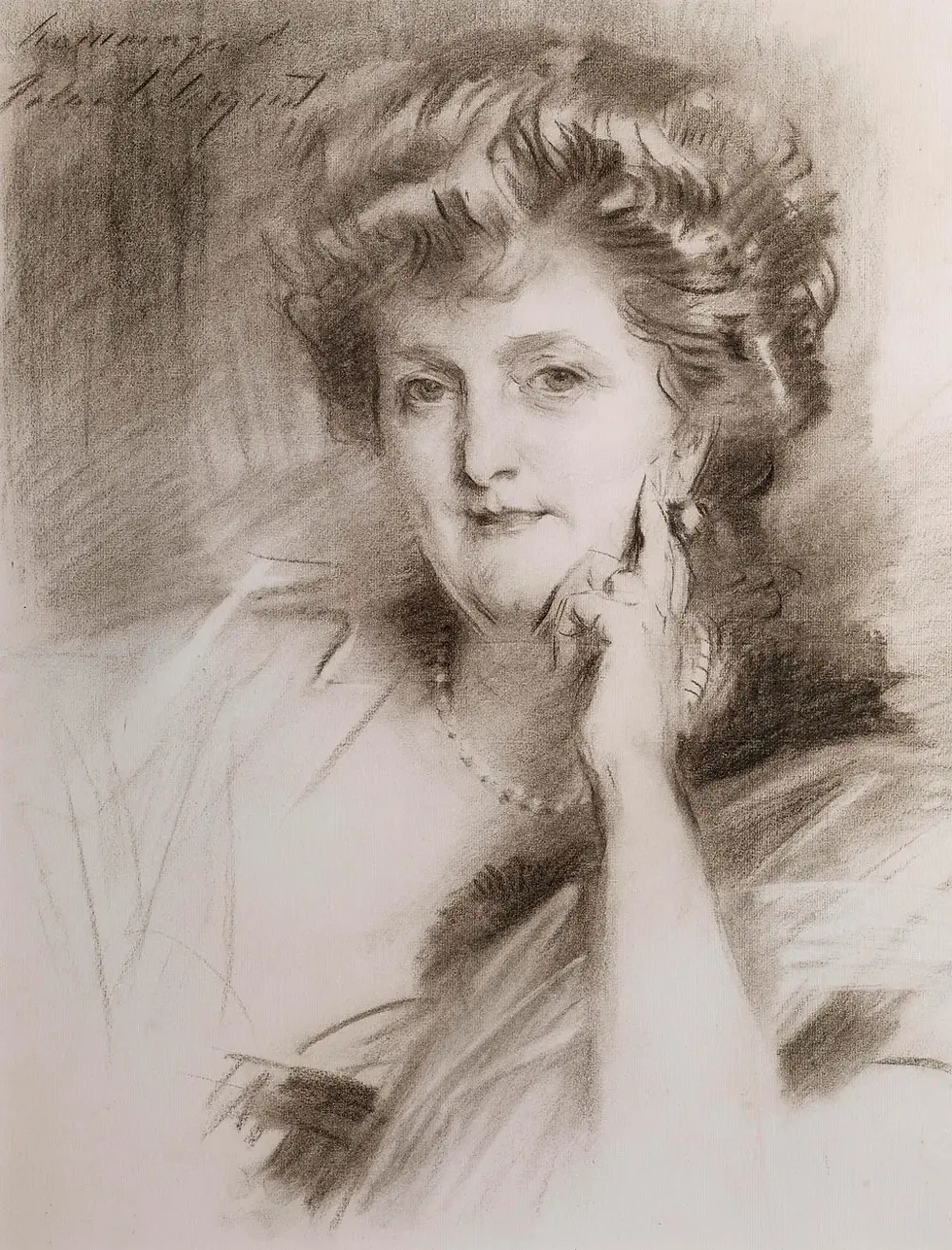
The other temporary exhibition was a small scale collection of work by John Singer Sargent focussed on American heiresses who married into English aristocracy – we had just missed the Sargent blockbuster at the Musée d’Orsay in Paris which opened the week after we left. But the Kenwood exhibition had some fine paintings and – of special interest – a selection of preparatory and stand-alone drawings which revealed what a fine draughtsman he was.
The only other temporary exhibition I saw in London on this visit was at the Tate Modern, a selection from the collection. Oliver and I went together and a highlight was Matisse’s The Snail (1952/53). But there were plenty of fine pieces, highlighting the – perhaps unexpected – quality of the Tate Modern’s collection.

Otherwise, our time was given over to visits to the V&A, Tate Britain, the National Gallery and the British Museum. We tried to visit the Sir John Soane Museum, but the queue stretched halfway around the block. When I had previously visited quite a few years ago, I was just one of a handful of visitors…reminding me of my very first visit to the Louvre. I found myself in the vast Renaissance Gallery, the only person except for a figure in the distance at the other end. Eventually we came together and recognised one another! He was Jonathan Watkins, whom I had known in Sydney and later to become a well-known gallery director and curator in Britain.
But we did enjoy a wonderful interlude just prior to flying out to Japan.
We journeyed down to Axminster in Devon to visit our friends, the painter John Beard and his wife, Wendy. John was in the final stage of preparing an exhibition for Messums West. You can explore the house and the work elsewhere on this website in the piece, John Beard’s Qualia.
Apart from getting us out of London and catching up with treasured friends, it was an opportunity to enjoy their fascinating house and superb garden – plus a morning visit to Lyme Regis for a breakfast snack beachside.

Tokyo
We arrived in Tokyo in early October to find the European Indian summer had followed us. After staying there once before, The Gate Hotel in Ryokogu had become our favourite. It is just minutes by foot from the station which itself is just two stops from Tokyo Central. Ryogoku is itself a lively location with its own character and numerous eating establishments. It is home to sumo wrestling in Tokyo and the wrestlers are a familiar sight strolling near the Sumo Centre which is almost opposite the hotel.
The hotel overlooks the Sumida River and is walking distance from a number of attractions. One, of course, is Asakusa (about a 30 minute walk) with its magnificent Sensoji Temple and Kaminariman Gate and nearby street market. The only problem is that it can be like an ant heap. So, to avoid going nuts and wasting your time, go early in the day.

But much closer – namely a 5-minute walk – is the exquisitely serene Kyu-Yasuda Garden. It is a walled stroll garden designed around a small lake (once directly connected to the nearby Sumida River). It offers the ultimate in meditative experiences with its walls quarantining it from the busy streets outside. It is rich in birdlife and home to many very happy tortoises.

Almost adjacent to the Garden is Yokoamicho Park and Tokyo Memorial Hall and Great Kanto Museum commemorating those who died in the 1923 earthquake. While not offering the serenity of Kyu-Yasuda, it has its own reflective quality.
Also close by is another gem of museum design, the Sumida Hokusai Museum, designed by the legendary Kazuyo Sejima and opened in 2016. The building consists of five connected fractured volumes clad in reflective aluminium panels. The fracturing motif is continued inside the 4-level building with cut-out windows creating visual connection to the urban streetscape outside.

Katsushika Hokusai (1760-1849) was a native of the Sumida area and the museum celebrates his life and work, contextualising it with the work of his Ukiyo-e contemporaries. The museum has a substantial permanent collection of Hokusai’s work, but also mounts a programme of temporary exhibitions. We had visited before. On this occasion the exhibition focussed on Hokusai’s bijin-ga prints – that is, beautiful women – contextualising them with the bijin-ga of other Ukiyo-e artists.

As part of that contextualisation, the exhibition offered a number of paintings by Hokusai’s daughter, Katsushika Oei who, after her mother’s death, worked alongside her father and developed a significant reputation for herself independently of her father. Hokusai himself said that Oei was a better painter of beautiful women than he was. Among the other contextual work I need to mention Utagawa Kuniyoshi’s decorative masterpiece, Kintaro and a Koi Fish (19th Century), a reminder – if any were necessary – of the magnificence of Edo Ukiyo-e woodblock prints.

Apart from the chance to feast on the work of Hokusai and his contemporaries, a visit to the Hokusai Museum is a necessity for anyone interested in the marriage of architecture and art. Another example, also relatively small in scale, is the Nezu Museum (which we visited on our previous trip to Tokyo), designed by Kengo Kuma, which also features a superb stroll garden.
In Ueno Park there is the National Museum of Western Art (1955) designed by Le Corbusier in collaboration with a number of Japanese architects. This is another fine marriage of art and architecture, although my favourite experience of the building was to sit in the café and look out on to the central courtyard and its framing low-rise buildings for the quintessential Le Corbusier experience.

Again we didn’t go there on this visit. Instead we explored for the first time the Tokyo National Museum also in Ueno Park with its phenomenal collection of Japanese art and, just adjacent to it, the Asian Art Museum notable for its superb collection and sophisticated display design.


